Ranked by electability score · Q3 2026 filings

The challengers.

Booting an incumbent takes more than disliking him — it takes a viable alternative. Here's the full field: money, records, and who's actually positioned to win.

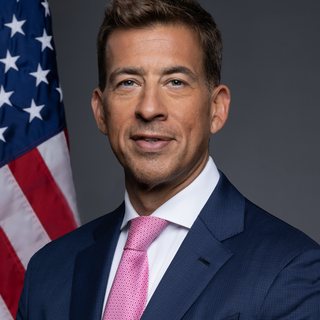
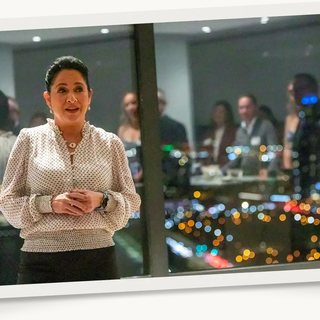
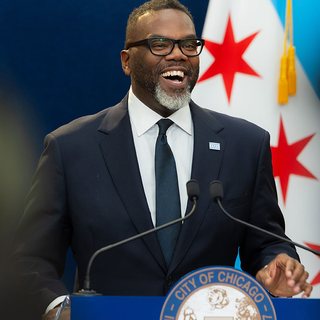
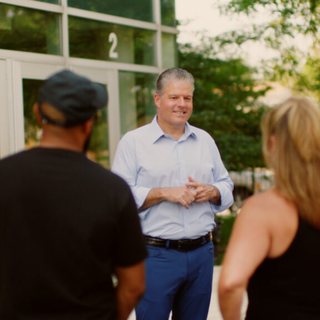
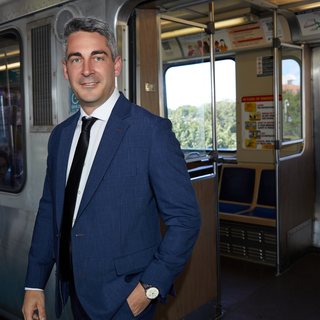
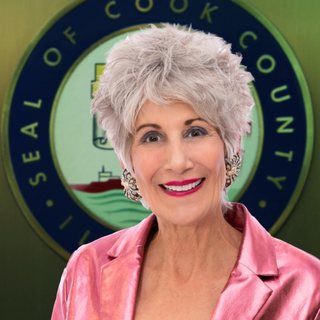
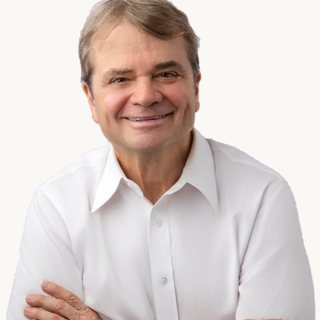
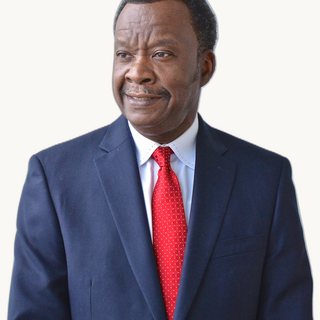
Fundraising figures from Illinois State Board of Elections Q3 2026 filings (period ending 9/30/26) via Sun-Times and Focal News reporting on the filings, unless noted. Q4 filings (due January 2027) will update this picture. One figure (Pappas) is provisional — flagged where it is. Nominating-petition filing closed 5 p.m. Oct 26, 2026. Fourteen candidates filed, per the Tribune: Giannoulias (~60,000 sigs), Quigley (~42,000), Kelly (~36,000), Brewer (~32,000), and Wilson (~30,000) on day one (Oct 19); Johnson (~33,000) on Fri Oct 23 — too late for the first-day ballot-position lottery (Fox 32); and Mendoza (over 26,000), Pappas (nearly 40,000), Holberg (32,000), Cardenas (31,500), Nee (31,000), Quinlan (26,000), Zoe Ma (17,000), and Carter-Walters (over 13,000) later in the window (WTTW · ABC7). Maronto, whom WTTW had named among the final-day filers, has since told NBC 5 Chicago she will run as a write-in after falling short of the 12,500-signature threshold. The Chicago Board of Elections has not yet posted its final candidate list. Objections are due Nov 2; the ballot is certified Dec 17. NBC 5 Chicago also reports Johnson's own petitions could be challenged: nearly 100 pages were photocopies — Chicago law requires original signatures — and five pages came from City Treasurer Melissa Conyears-Ervin; his campaign concedes a few photocopies "might have slipped in" but says he has more than enough signatures to survive (NBC 5). Candidate photos via campaign and official government sources.

With 10+ candidates splitting the anti-Johnson vote, the crowded field structurally helps the incumbent. The question that matters isn't who has the best platform — it's who can consolidate the field and beat him head-to-head. Follow the money first; it tells you who's serious.

Side by side

Compare the field at a glance.

Fundraising, experience, signature position, and notable backing — one table. Scroll sideways on mobile. Full bios and issue positions below.

#CandidateStatusCash on hand, Sep 30 (Q3 filing)ExperienceSignature positionNotable backing
1Alexi GiannouliasDeclared$19.15MIL Secretary of State; ex-IL TreasurerHire 1,000 officers by 2030; bring back ShotSpotterSEIU Locals 1 & 73 (50,000 workers, Oct 20); business leaders + building trades (reported); Liam Stanton endorsed
2Susana MendozaDeclared$1.73MIL Comptroller; ex-Chicago City Clerk; 2019 mayoral run“TRIM” waste; prepay pensions; bring back ShotSpotterNone reported
3Brandon JohnsonIncumbent$379KMayor (2023–); ex-county commissioner; CTU organizerRecord: $300M tax hike rejected 50–0; ShotSpotter canceledCTU — his political base; ex-organizer
4John KellyDeclared$2.52MCEO, All-Circo; City Hall lobbyist; never held office1,000 officers in year one; ~400 CPD back on CTA day oneEx-Ald. Bill Singer (chair); Chris Chelios (treasurer)
5Joe HolbergDeclared$1.06MFounder/CEO, Holberg Financial (sold); ex-math teacherFreeze property taxes; build 100,000 housing unitsSelf-funded ($850K+)
6Maria PappasDeclared~$278K*Cook County Treasurer (1998–)Tax-watchdog record; no mayoral platform yetNone reported
7Mike QuigleyDeclared$343KU.S. Rep, IL-05 (2009–); ex-county commissioner“Austerity budget”: cuts, layoffs, furloughs; 50,000 homesNone reported
8Willie WilsonDeclared$48KFounder/CEO, Omar Medical; 4th mayoral runPension constitutional amendment; dome Soldier FieldSelf-funding (prior cycles)
9Matt BrewerDeclared$239KCHA board chair (ousted 6/26); attorneyGrow the tax base, don’t raise taxes; re-envision downtownNone reported
10George CardenasDeclared$106KCounty Board of Review; 19 yrs as aldermanCap spending at inflation; hire 500 officers; 50,000 jobsNone reported
11Danielle Carter-WaltersDeclared<$100KCo-founder, Chicago Flips Red; small-business ownerHire ~2,000 officers; end sanctuary policy in 30 daysNone reported

* Provisional: via secondary roundup; primary source not independently verified. Q3 2026 filings (period ending 9/30/26); Q4 filings due January 2027 will update this table.

The electability formula

Every candidate gets a 0–100 score in five categories. The weighted total sets the ranking above — the full math is below so you can check it. The scores are our analysis; the inputs (cash, polls, ballot status) are facts.

  • 40% — Fundraising. Cash on hand from IL State Board of Elections filings. Money buys staff, ads, and field — a campaign that can’t fund them can’t win citywide.
  • 25% — Polling. Public polls of the 2027 field — M3 Strategies (Aug 2026; public employees only) and two Mansueto/NORC ChicagoSpeaks waves (June 15–23, 2026; and mid-September 2026, released Oct 19). Candidates leading the anti-Johnson alternatives score highest; no public polling scores a neutral 50. Full details in the polls box below.
  • 15% — Ballot/status certainty. Declared = 100; likely but unconfirmed = 60.
  • 10% — Name recognition. Prior citywide or statewide office and past mayoral runs.
  • 10% — Organizational strength. Reported endorsements, labor backing, and campaign infrastructure.
CandidateFund.PollStatusNameOrg.Total
Alexi Giannoulias10090100959096
Susana Mendoza6085100906075
Brandon Johnson50551001008567
John Kelly7050100406066
Joe Holberg6050100355060
Maria Pappas3570100855060
Mike Quigley4050100605055
Willie Wilson2050100804048
Matt Brewer3050100304047
George Cardenas2050100454044
Danielle Carter-Walters2050100253041

Fundraising scaled from cash tiers: ~$22M = 100; ~$2M = 70; ~$1M = 60; ~$600K = 50; ~$350K = 40; <$100K = 20. Totals rounded to whole numbers; ranks follow exact values. Pappas cash figure provisional.

Why Johnson ranks third. Incumbency is the most powerful asset in politics — universal name ID, a field operation, and a ten-candidate field that lets him win with roughly a fifth of the vote. That’s not an endorsement; it’s the case for consolidation. See our methodology.

The polls behind the scores

Four polls feed the polling component above. Read the fine print — especially who was asked.

PollsterField datesSampleKey resultLink
Mansueto Institute / NORCChicagoSpeaks panel, 2nd waveMid-September 2026 (released Oct 19)n=1,108 Chicago adultsGiannoulias 25%, Johnson ~14% among likely voters; 34% undecided; no other candidate in double digits; Johnson approval 22%, disapproval 53%Fox32 (via Tribune) · Ninth Ward
Mansueto Institute / NORCChicagoSpeaks panelJune 15–23, 2026n=1,194 Chicago adults (±4.1)Johnson approval 23%; only 13.6% of likely voters want him to run again; most excitement for Giannoulias (53%) and Mendoza (47%)Capitol Fax (via Crain’s)
M3 StrategiesRepublican pollsterNot published; aired Aug 31, 2026n=475 public employees only (±4.5) — not the general electorateJohnson 20.1%, Giannoulias 17.6%, Mendoza 11.2%, Wilson 6.9%, Carter-Walters 6.8%, Kelly 5.1%, Quigley 2.3%WGN report (via Wirepoints)
Victory ResearchRepublican pollster; Pappas-commissionedSept 27–29, 2025n=800 likely voters (±3.5)Head-to-head only: Pappas 56%, Johnson 23%, undecided 21%Chicago Magazine

No official public release was found for the Mansueto/NORC Q2 2026 report or the M3 Strategies memo; links go to the best available reporting. Read the Pappas 56–23 as a measure of Johnson’s unpopularity — it is an internal poll paid for by Pappas, testing only two candidates.

Decision tool

Find your match.

Three quick questions. We rank all 11 candidates by how closely their stated positions match yours — with electability layered in exactly as much as you want.

One step

Pick up to 3 issues, take a stand

Tap an issue on the left, then choose your stance on the right. The live standings move as you answer.

Rank by

Prefer quotes to issues? Try Who said what? — the Agree/Disagree quote game.

How matching works. The stance mapping is our analysis of each candidate’s stated positions — see our methodology. Candidates with no stated position aren’t penalized; they’re marked openly. Electability scores weigh cash on hand and public polling (also analysis). This is a starting point, not a voting instruction.

1
Alexi Giannoulias

Alexi Giannoulias

Illinois Secretary of State (2023–present); Illinois Treasurer (2007–2011)

$19.15Mcash on hand in his committee
$3.0Mraised in Q3 2026

Elected Illinois Treasurer at 30 — the youngest state treasurer in the nation. Won the 2022 Secretary of State race by 10+ points. As SoS: mobile/popup DMVs and the first-in-the-nation Right-to-Read anti-book-ban law. Backed by business leaders and building-trades unions. On Oct 20, SEIU Locals 1 & 73 — 50,000+ janitors, security officers, door staff, airport and school workers who backed Johnson in 2023 — endorsed him (SEIU Local 1). Liam Stanton suspended his campaign in August 2026 and endorsed him. Leads the latest public poll of likely voters at 25% (Mansueto/NORC, Oct 2026).

Lane: Moderate Democrat · establishment + labor-backed frontrunner

Cash on hand is in his committee, which predates his Aug 2 mayoral declaration — not money raised for the mayoral race.

Strengths

  • $19.15M war chest — roughly 50× the incumbent’s and ~8× the next challenger
  • Twice a statewide winner (Treasurer at 30; Secretary of State by 10+ points)
  • SEIU Locals 1 & 73 endorsement (Oct 20) — the race’s biggest labor defection from Johnson; establishment + building-trades backing

Vulnerabilities

  • Dual-office lawsuit challenges running for re-election and mayor simultaneously
  • Vague on growth and housing — no unit target; backs the same 3% millionaires tax as Johnson

Last updated: Oct. 2026

2
Susana Mendoza

Susana Mendoza

Illinois Comptroller (2016–present); Chicago City Clerk (2011–2016)

$1.73Mcash on hand
$277Kraised in Q3 2026

First Hispanic independently elected to statewide office in Illinois; first woman Chicago City Clerk. As Comptroller, claims elimination of the $16.7B bill backlog, 12 credit upgrades, and growing the rainy-day fund from $48K to $2.4B. Ran for mayor in 2019. Polling consistently puts her among the leading alternatives to Johnson.

Lane: Centrist Democrat · pro-police, "tough on crime"

Strengths

  • Strongest name ID in the field — two statewide wins plus a 2019 mayoral run
  • Comptroller record to run on: $16.7B backlog claim, 12 credit upgrades
  • Polls consistently among the leading Johnson alternatives

Vulnerabilities

  • Q3 fundraising ($277K) trailed Kelly ($545K) and Giannoulias ($3.0M)
  • Finished 4th in the 2019 mayoral race; tied to the Springfield establishment

Last updated: Oct. 2026

3
Brandon Johnson

Brandon Johnson

Incumbent

Mayor of Chicago (2023–present); ex-Cook County Commissioner; CTU organizer

$379Kcash on hand
$123Kraised in Q3 2026

Won the 2023 runoff with 52.2% vs. Paul Vallas. Now polling at 22% approval (UChicago/NORC, Oct 2026), with 55% of likely voters not enthused about him running again. Outraised roughly 24-to-1 by Giannoulias in Q3 ($123K vs $3.0M). Read the record.

Lane: Progressive — "the only progressive in the race" (his words)

Strengths

  • Incumbency: name ID, city apparatus, and a CTU ground game that won 2023
  • Progressive lane entirely to himself in a split field

Vulnerabilities

  • 22% approval — weakest of any modern Chicago mayor
  • $379K cash vs $19.15M frontrunner — down from $813K in Q1 and $631K in Q2; $300M tax hike died 50–0

Last updated: Oct. 2026

4
John Kelly

John Kelly

CEO, All-Circo Inc. (consulting/lobbying); co-founder, Sentinel Security

$2.52Mcash on hand
$545Kraised in Q3 2026

Longtime City Hall lobbyist (White Sox, United Center, Bally's casino). Campaign chaired by ex-Ald. Bill Singer; treasurer is former Blackhawk Chris Chelios. Never held elected office. Running on public safety, city services, and recruiting corporate HQs. Raised $1.54M in Q2 alone, including $600K in loans, and $545K in Q3.

Lane: Business-backed moderate Democrat

Strengths

  • Fastest fundraiser after Giannoulias — $545K in Q3
  • Sharpest public-safety pitch: 1,000 officers in year one, ~400 back on CTA day one

Vulnerabilities

  • Never held elected office; longtime City Hall lobbyist past cuts against reformer image
  • $600K of the Q2 haul was loans, not donations

Last updated: Oct. 2026

5
Joe Holberg

Joe Holberg

Founder/CEO, Holberg Financial (2015–2023, sold); former math teacher

$1.06Mcash on hand (Q3 filing)
$850K+self-contributed

Built and sold a wealth-advisory firm. First candidate to enter the race (October 2025). Platform: 100,000 new housing units, freeze property taxes, no "reckless debt."

Lane: Pro-growth business Democrat

Strengths

  • Self-funded ($1.06M cash on hand, $850K+ of his own) — can’t be starved out early
  • Most detailed CTA plan in the race; first candidate in (Oct 2025)

Vulnerabilities

  • Zero elected experience and low citywide name ID
  • Self-funding has limits against a $19.15M frontrunner

Last updated: Oct. 2026

6
Maria Pappas

Maria Pappas

Cook County Treasurer (1998–present); ex-County Commissioner

~$278Kcash on hand
—total raised not verified

28 years as County Treasurer; famous for her property-tax reports. A September 2025 Pappas-commissioned poll (Victory Research) had her leading Johnson 56–23 head-to-head. Filed nominating petitions Oct 26 with nearly 40,000 signatures (Tribune). Also named in the dual-office candidacy lawsuit.

Lane: Moderate Democrat · tax watchdog

⚠️ Cash figure via Wikipedia's fundraising roundup; primary source not independently verified.

Strengths

  • 28 years as County Treasurer with a tax-watchdog brand
  • Led Johnson 56–23 head-to-head in a Sept 2025 Pappas-commissioned poll

Vulnerabilities

  • No mayoral platform exists yet
  • Dual-office question until the Nov 2026 treasurer race concludes

Last updated: Oct. 2026

7
Mike Quigley

Mike Quigley

U.S. Representative, IL-05 (2009–present); Cook County Commissioner (1998–2009)

$343Kcash on hand
—total raised not verified

17 years in Congress, known for government-transparency and reform advocacy. Running for mayor while simultaneously running for House re-election — a dual candidacy now facing a legal challenge. Says Chicago "can't tax its way out of crisis."

Lane: Moderate/liberal Democrat · pro-business

Strengths

  • 17 years in Congress with a reform/transparency brand
  • Only candidate calling for an “austerity budget” — a distinct lane

Vulnerabilities

  • Dual-office candidacy (also running for House re-election) draws a lawsuit
  • Under $400K cash and low Chicago name ID outside the lakefront

Last updated: Oct. 2026

8
Willie Wilson

Willie Wilson

Founder/CEO, Omar Medical Supplies (1997–present)

$48Kcash on hand (Q3 filing)
—self-funding in prior cycles

Fourth mayoral bid (2015, 2019, 2023); 2016 Democratic presidential bid; 2020 Senate run. Famous for gas, grocery, and cash giveaways. Self-funding millionaire.

Lane: Populist businessman

Strengths

  • Universal name ID from three previous mayoral runs
  • Self-funding millionaire; giveaways generate constant earned media

Vulnerabilities

  • Lost all three previous mayoral bids — ceiling questions
  • Announced after Q2; $48K cash on hand

Last updated: Oct. 2026

9
Matt Brewer

Matt Brewer

CHA Commissioner (2013–present); CHA Operating Chair/Interim CEO (2024–2026)

$239Kcash on hand
—total raised not verified

Led the CHA board until ousted by Johnson in June 2026. Partner at Bartlit Beck; founded the city's first Black-owned dispensary; co-owner of the Wiener's Circle.

Lane: Pro-business, affordability-focused Democrat

Strengths

  • Ousted as CHA board chair by Johnson — a ready-made contrast story
  • Pro-growth, anti-tax message with business credibility

Vulnerabilities

  • $239K cash trails the top fundraisers; never held elected office
  • Low citywide name ID

Last updated: Oct. 2026

10
George Cardenas

George Cardenas

Cook County Board of Review, 1st District (2022–present); 12th Ward Alderman (2003–2022)

$106Kcash on hand
—total raised not verified

19 years as alderman; now sits on the property-tax appeals board.

Lane: Moderate Democrat

Strengths

  • 19 years as alderman + current property-tax appeals role: fluent in city finance
  • Most line-item budget plan in the field (~$245M in identified savings)

Vulnerabilities

  • $106K cash — can’t compete on paid media
  • Aldermanic insider in a change election

Last updated: Oct. 2026

11

Danielle Carter-Walters

Co-founder, Chicago Flips Red; small-business owner

<$100Kreported (announced after Q2)
—not verified

Small-business owner; wife of a retired CPD officer; conservative grassroots organizer.

Lane: Republican-leaning conservative

Strengths

  • Sharpest contrast on crime and immigration: ~2,000 officers, end sanctuary in 30 days
  • Grassroots conservative energy in a low-turnout race

Vulnerabilities

  • Under $100K; announced after Q2
  • Several positions sourced from social posts, not independently verified; narrow lane in a Democratic city

Last updated: Sept. 2026

Candidate filter

Where they stand.

Pick the issue you care about. See every candidate's position side by side — sourced, with "no stated position" shown openly instead of hidden. For the incumbent, we show his record as mayor, not promises.

Positions compiled Sept 29, 2026 from campaign sites, interviews, and questionnaires; "Source" links go to the underlying reporting. "No stated position" means we couldn't find one — not that they don't have one. Tracked for the 11 candidates above; the eight minor candidates have no published issue platforms we could verify.

Also declared (no significant fundraising reported)

What the field tells us

  1. Money: Giannoulias ($19.15M) holds roughly 8× the war chest of the next-best-funded candidate (Kelly, $2.52M) and ~50× the incumbent's ($379K). Only Kelly, Mendoza, and Holberg have crossed $1M.
  2. The main threat: Polling consistently puts Giannoulias and Mendoza as the leading alternatives, with Johnson at ~20% in the crowded field. The incumbent is polling barely ahead of his top challenger.
  3. The split-field risk: With 10+ candidates fragmenting the anti-Johnson vote, the race likely turns on whether also-rans consolidate behind one alternative before February 23. A divided field is Johnson's best hope.

Read the record. Then vote.

February 23, 2027 — with a runoff April 6 if nobody cracks 50%.

How to vote →